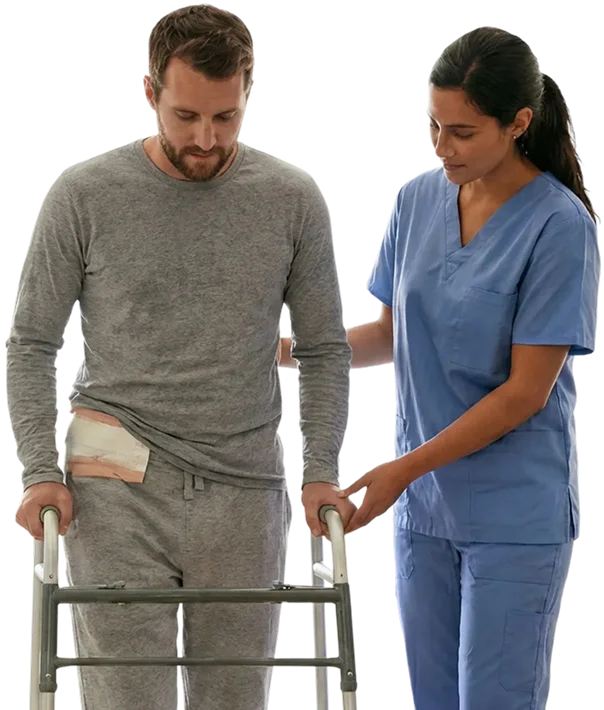
Failed Hip Replacement? You May Qualify for Compensation
Hip implant failures can cause severe pain, sudden loss of mobility, and the need for revision surgery. If your implant failed early, you may qualify for compensation.
A Hip Replacement Should Restore Your Life - Not Take It Over
Hip replacement is one of the most common surgeries in the U.S., and for most people, it provides relief and stability for many years. But when a hip implant component fails prematurely, patients can experience the following.:
Sudden, severe hip pain
Emergency revision surgery
Grinding or clicking in the joint
A sensation of instability
Loss of mobility
Long-term disability or complications
If your hip replacement failed within 8 years, or if a doctor told you a component broke, shifted, loosened, or “came apart,” you may qualify for financial compensation.
You may qualify even if your symptoms developed slowly or weren’t dramatic.
01
Sudden or Persistent Hip Pain
02
Instability or “Giving Out”
03
Grinding, Clicking, or Mechanical Sensations
04
Swelling or Warmth Around the Hip
05
Dislocation or Partial Dislocation
06
Recommendation for Revision Surgery
You May Qualify For Compensation If:
You had a hip replacement
The implant failed within 8 years
You heard a “pop” — but this is NOT required
You needed revision surgery
You experienced pain or instability
You're dealing with reduced mobility today
Serious Health Risks of a Failed Implant
Metallosis (metal particles in the body)
Osteolysis (bone loss)
Liner fragment migration
Repeated hip dislocations
Deep joint infection
Multiple revision surgeries
Not Sure What Implant You Received? We Can Help.
Doctors often cannot confirm the implant type. However, the hospital should have this information and we can assist you in requesting it.
01
Your original operative report
02
Your revision operative report
03
Product labels from the hospital
What You May Be Compensated For
Medical Bills
Revision surgery
Pain & suffering
Reduced mobility
Lost income
Loss of quality of life
About PBC Law Firm
Pendley, Baudin & Coffin represents individuals harmed by defective medical devices and corporate wrongdoing. We fight for your rights and work to get you the compensation you deserve.